
High-compliance food-grade silicone bakeware is replacing old metal pans in commercial kitchens and mass retail stores. Sourcing managers now look for high-precision rubber parts that clear global food safety testing. Our factory runs 1,800 square meters of production space to turn custom mold drawings into qualified silicone goods. We work directly with private label brands and wholesalers to set up dependable OEM/ODM Silicone Mold Services from our facility.
The global market needs full material transparency. Sourcing teams in Europe and North America must verify raw compound grades to avoid customs issues. Here are the 7 main production and material reasons why premium food-grade silicone is the standard choice for wholesale buyers today.
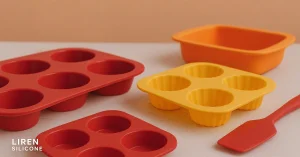
1. Food-Grade Silicone Bakeware Certification Compliance (FDA & LFGB)
Silicone molds made for mass retail channels must clear official chemical extraction limits. Our production lines use pure formulations that pass international food contact testing without leaking chemicals under high heat. Our parts align with official FDA and European safety limits.
| Regulation / Standard | Target Region | B2B Supply Chain Significance |
|---|---|---|
| FDA 21 CFR 177.2600 | United States | Mandatory safety requirement for kitchenware sales and commercial oven use. |
| BPA-Free Certification | Global Markets | Ensures non-toxic performance under thousands of continuous baking cycles. |
| LFGB (BfR Matched) | Europe / Germany | Requires strict organic migration testing for premium consumer brands. |
2. Material Selection: Platinum-Cured Raw Materials Only
We use premium platinum-cured silicone polymers instead of cheap peroxide alternatives for our high-end projects. Platinum curing stops chemical odor and white scaling during processing. The finished bakeware stays odorless, retains long-term color clarity, and passes sensory tests for baby products and professional bakeware lines.
3. Working Temperature Limits: -40°C to 230°C Range
Commercial bakeries need tooling that handles sudden shifts from -40°C blast freezers to 230°C commercial baking ovens. Our solid silicone mixtures do not crack, fade, or turn brittle under repeated high-heat exposure, giving the molds a long life cycle in industrial workflows.
4. Custom Tooling Options for Private Label Brands
We work directly from your 3D CAD files. Our engineering workshop handles the full cycle from print reviews to mold base cutting. LIREN SILICONE offers extensive OEM/ODM Silicone Mold Services to secure your proprietary shapes. We use high-grade steel for our tooling cores to guarantee crisp part lines for long production runs.
⚙️ Factory Tooling Notice for Sourcing Managers:
If you are launching a new private-label collection or a seasonal design, do not use off-the-shelf open molds. Go to our direct service page at OEM/ODM Silicone Mold Services to see our 3D DFM engineering steps, sample production times, and compression tool setup rules.
5. Post-Curing Standards: Standard FDA vs German LFGB Production
A reliable factory knows how to match processing steps to your target market. For standard US FDA orders, we use clean platinum-cured materials that pass safety rules straight out of the hot press, saving processing costs and energy for our buyers. For European markets with strict German LFGB rules, we put the molded parts through a 4-hour post-curing baking cycle in specialized industrial ovens. This step drives out any trace volatile matter to guarantee compliance with the toughest European labs.
6. Coated Metal Pans vs Inherent Non-Stick Silicone Cavities
Traditional baking pans use chemical coatings like PTFE or PFOA that wear away after repeated washing. Commercial silicone uses natural surface tension for easy release, built right into the mold texture. This eliminates the manual oiling step, lowers bakery labor costs, and removes chemical flake risks.
7. Shore A Hardness and Tear Strength for Automated Bakery Lines
Modern food plants use fast robotic demolding arms that pull hard on mold rims. We mix our raw silicone rubber to achieve optimal tear resistance and the right Shore A hardness (typically 40 to 50 durometer for baking). This keeps corners from tearing along the split lines, preventing downtime in high-volume processing lines.
| Sourcing Priority | How Industrial Manufacturing Complies |
|---|---|
| Raw Material Logs | Full batch material tracking, formulation data, and regular updates from SGS/TUV testing labs. |
| Private Label Adjustments | Laser logo cutting, specific Pantone color matching, and custom printed shipping boxes. |
| Mold Longevity | Thick-walled cavity designs and durable steel bases that run over 100,000 cycles without wearing out. |
| Ocean Freight Control | Flexible, stackable product layouts that compress carton volume to reduce sea container costs. |
Our Factory Infrastructure in Dongguan
Working from our direct factory in Dongguan, China, LIREN SILICONE handles volume production for retail brands, wholesale distributors, and food service businesses. We run high-tonnage solid compression presses alongside strict QA protocols. We do not use trading brokers; we manage the material, the steel tools, and the final quality checks ourselves to protect your supply chain through our direct OEM/ODM Silicone Mold Services hub.
For Sourcing Managers, Wholesalers & Brands
Start your custom silicone manufacturing project with our engineering team:
- Direct Factory Volume Pricing Matrix
- 3D CAD Drawing and Tooling Setup Reviews
- Pre-Production Prototype Material Samples
- Retail Packaging and FBA Labeling Support
Frequently Asked Sourcing & Technical Questions
Q1: How do you verify material compliance for FDA and LFGB markets?
A: We source our raw silicone from traceable compounders with clear testing records. For standard US FDA orders, pure platinum curing achieves safety limits right from the hot press. For German LFGB orders, we run a full post-curing bake in industrial ovens to clean out volatile organic compounds (VOCs) to clear European customs tests.
Q2: Can we cut our brand logo directly into the custom mold tooling?
A: Yes. Our in-house tooling shop uses CNC engraving to cut logos, part numbers, or recycling symbols directly into the steel cavities, creating clean raised or debossed text on the finished silicone parts that will never wear off.
Q3: What ranges of silicone hardness do you run for custom parts?
A: We mix raw polymers to hit specific hardness levels from 20 Shore A up to 80 Shore A. For commercial bakeware, we target 40 to 50 Shore A to give the mold walls enough structural stiffness while keeping them flexible enough for smooth manual or robotic release.
📌 Extended Sourcing Resource:
For a full technical breakdown of custom tooling capabilities, precision production standards, and direct manufacturing compliance, explore our comprehensive guide on OEM/ODM Silicone Mold Services.
Partner with a Trusted Silicone Bakeware Manufacturer
Connect directly with our engineering and sourcing office to review your engineering blueprints, evaluate technical mold specs, and secure contract production capabilities.