
Introduction
The silicone mold manufacturing process is far more complex than simply shaping silicone into a desired form. Behind every high-quality silicone baking mold, baby teether, chocolate mold, industrial component, or custom OEM product lies a carefully controlled engineering workflow designed to ensure dimensional accuracy, product safety, and long-term durability.
For brands, wholesalers, and product developers, mastering the silicone mold manufacturing process can significantly reduce development risks, shorten production timelines, and improve overall product quality. From the initial CAD design review to tooling development, compression molding, post-curing, and final quality inspection, each stage directly affects the performance of the finished product.
Step 1: CAD Design Review
Every successful custom silicone mold manufacturing process begins with a comprehensive CAD design review.Customers typically provide 3D files in formats such as STL, STEP, IGES, or SolidWorks.
At this stage, the engineering team evaluates whether the design can be manufactured efficiently using compression molding technology. While a design may appear perfect on a computer screen, certain geometries can create serious manufacturing challenges during production.
The fundamental objective of the CAD review is to completely eliminate potential manufacturing hazards during the digital phase before any actual tooling investment is made. This practice minimizes the subsequent production cycle and avoids unnecessary, costly mold modifications at a later stage.
The review process focuses on:
Structural Feasibility: Engineers verify that the design can withstand repeated molding cycles without deformation or tearing.
Wall Thickness Consistency: Uneven wall thickness may result in incomplete curing, excessive shrinkage, warping, or reduced product durability. Maintaining uniform thickness allows silicone compounds to flow and cure more consistently throughout the mold cavity.
Undercut Evaluation: Complex undercuts often require specialized tooling strategies. Depending on the product geometry, engineers may recommend split mold structures, flexible demolding solutions, core-pulling mechanisms, or design modifications.
Material Compatibility: Different applications require different silicone formulations, including platinum-cured food-grade silicone, high-transparency silicone, high-temperature industrial silicone, or baby-safe LFGB-compliant silicone.
Step 2: DFM Analysis (Design for Manufacturability)
Once the CAD model is approved, engineers perform a detailed Design for Manufacturability (DFM) analysis. DFM is one of the most important stages in the silicone mold manufacturing process because it directly affects production efficiency, product consistency, and tooling lifespan.
A thorough DFM analysis examines several critical factors:
-
Draft Angles: Draft angles facilitate smooth product release from the mold cavity. Insufficient draft causes mass production cycle efficiency to plunge, leading to product tearing, surface damage, or increased demolding force. Engineers optimize the draft geometry at a micron level while completely maintaining the original product outline, thereby increasing the yield rate to reduce costs and raise efficiency.
-
Material Shrinkage: All silicone compounds experience shrinkage during curing. Typically, the shrinkage rate of silicone rubber ranges between 2.8% and 3.0%. The exact shrinkage magnitude depends on the material formulation and its hardness. As a general rule, higher hardness results in smaller shrinkage, while softer material leads to greater shrinkage. Extremely precise shrinkage compensation calculations ensure that the final product dimensions fit the customer’s drawing tolerances perfectly after cooling to room temperature.
-
Parting Line Placement: Parting lines are the locations where mold sections meet. Poorly positioned parting lines create visible flash, cosmetic defects, or difficult trimming operations. Strategic placement of the parting line significantly balances both product aesthetics and factory manufacturing feasibility.
-
Venting Design: Air trapped inside mold cavities can create voids, incomplete filling, or surface defects. Proper venting channels allow air to escape while maintaining dimensional accuracy.
Step 3: Tooling Development
After DFM approval, the project moves into tooling development. The mold itself is the foundation of production quality. Even the highest-grade silicone compound cannot compensate for poor tooling design.
-
Mold Steel Selection: Depending on production volume and product complexity, engineers select appropriate tooling materials, considering expected production cycles, surface finish requirements, product geometry, and dimensional tolerances. High-grade steel improves wear resistance, thermal stability, mold longevity, and product consistency.
-
CNC Machining: Computer Numerical Control (CNC) machining creates the primary cavity structures. In a professional silicone mold manufacturing process, modern CNC equipment enables high dimensional accuracy, complex cavity geometries, and consistent repeatability.
-
Mold Polishing and Surface Treatment: After the mold leaves the CNC machine, a critical tool polishing (benchwork) procedure is required. This includes mirror polishing, electroplating, or applying specialized surface treatments such as sandblasting or Teflon coating onto specific mold surfaces. This step is vital to ensure the smooth release of the product from the core and cavity (male and female molds) once the mold is running on the machine.
-
EDM Processing: Electrical Discharge Machining (EDM) is used for intricate details that cannot be achieved through conventional machining methods, such as deep cavities, fine textures, or sharp internal features.
-
Mold Assembly and Testing in Silicone Mold Manufacturing Process: Once machining is completed, all components are assembled and inspected. Trial runs are conducted to verify cavity alignment, material flow, product release performance, and surface quality. Any required adjustments are completed before mass production begins.
Step 4: Compression Molding
Compression molding is the core manufacturing technology used for many high-performance silicone products. Compared to injection molding, solid silicone compression molding technology demonstrates unparalleled, overwhelming process control advantages in the following vertical fields: thick-wall products, food-grade silicone molds, baby products, complex custom components, and multi-color silicone structures.
Material Preparation: Before molding, silicone compounds are carefully prepared according to production specifications, including hardness, color matching, curing characteristics, and regulatory compliance requirements. Material batches are verified to ensure consistency throughout production.
Preform Cutting: Silicone material is weighed and cut into precise preforms. Accurate preform sizing is essential because insufficient material can create short shots, while excessive material increases flash generation.
Compression Cycle: The silicone preform is placed inside the mold cavity. The mold is then closed under high pressure and elevated temperature. During this process, silicone flows throughout the cavity, air escapes through venting channels, cross-linking reactions occur, and product geometry is formed. The combination of pressure, temperature, and curing time determines final product quality.
Demolding: After curing is completed, products are carefully removed from the mold. Proper mold design allows products to release cleanly while preserving surface finish, structural integrity, and dimensional accuracy.
Step 5: Deflashing and Trimming
After the compression molding cycle is completed, the products enter the deflashing and trimming stage. Even with precision-engineered tooling, a small amount of excess silicone—known as flash—may appear along the mold parting lines. Managing flash effectively is essential for achieving a professional appearance and ensuring compliance with food-contact and baby-product safety standards.
Why Flash Occurs: Flash is typically caused by excess material volume, high molding pressure, tool wear over time, or complex cavity geometries. While flash cannot always be eliminated completely, proper mold design and process control can significantly reduce it.
Manual and Precision Trimming: Experienced technicians carefully remove excess material without affecting the final product dimensions. Special attention is given to food-contact surfaces, decorative details, baby product edges, and complex 3D geometries. A properly trimmed product should exhibit smooth edges, consistent dimensions, and excellent visual appeal.
Surface Inspection: Following trimming, each production batch undergoes visual inspection to identify surface blemishes, incomplete trimming, flash residues, or cosmetic defects. Only products that meet predefined quality standards proceed to the next manufacturing stage.
Step 6: Post-Curing (Secondary Vulcanization)
For premium food-grade and baby-safe silicone products, post-curing is one of the most important stages in the silicone mold manufacturing process. Many manufacturers stop after primary molding. However, high-performance silicone products intended for demanding international markets strictly require an additional secondary vulcanization process.
What Is Post-Curing?
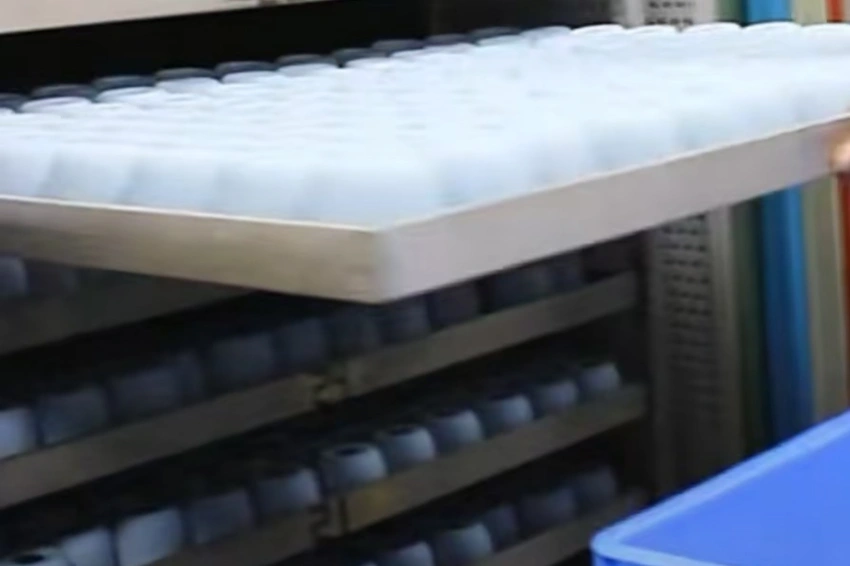
Post-curing is a controlled heat treatment process performed after molding. Products are placed inside industrial curing ovens and exposed to elevated temperatures for a specified period. At LIREN SILICONE, our standard protocol involves a 200°C curing temperature, a 4-hour curing cycle, and a controlled airflow environment.
Why Post-Curing (Secondary Vulcanization) Matters
Primary molding initiates the cross-linking process, but secondary vulcanization completely drives out and decomposes the residual vulcanizing agents added during silicone compounding, which cannot be fully volatilized during the primary molding phase. Secondary vulcanization thoroughly decomposes those substances, purifies the material, stabilizes the silicone matrix, and enhances the product’s wear resistance and long-term durability.
Secondary vulcanization is widely applied to food-contact products, such as baby products, bakeware, kitchenware, and medical supplies. It is a rigid requirement for quality and regulatory compliance.
While low-priced alternative goods cut this critical procedure to save money, delivering premium products means strictly executing every detailed step of the workflow without cutting corners. This uncompromising adherence to the full process is the core value of partnering with LIREN SILICONE.
The benefits include:
Elimination of Volatile Compounds: Residual volatile substances are driven out of the silicone matrix, achieving lower odor levels, improved product purity, and enhanced consumer safety.
Improved Chemical Stability: Additional cross-linking improves molecular stability and long-term performance.
Enhanced Regulatory Compliance: Post-curing helps products meet strict food-contact regulations such as FDA requirements, LFGB requirements, and European food-contact standards.
Better Heat Resistance: Properly post-cured silicone maintains its performance over a wider temperature range, which is critical for bakeware, kitchen tools, baby products, and industrial applications.
Step 7: Quality Inspection
Before products are approved for shipment, they undergo a comprehensive quality control process. The goal is not simply to identify defects but to ensure consistency throughout the entire production batch.
Dimensional Verification: Critical dimensions are verified against approved samples and customer blueprints to ensure full compliance with customer specifications.
Visual Inspection: Quality inspectors evaluate surface finish, color consistency, mold marks, contamination, and flash residues. Products failing visual requirements are removed from production batches.
Hardness Testing: Shore A hardness testing verifies that the silicone compound matches approved specifications. Maintaining hardness consistency is essential because it affects product flexibility, demolding performance, durability, and user experience.
Functional Testing: Depending on the product type, additional testing may include tensile testing, tear resistance testing, compression testing, heat resistance testing, and repeated use simulations. Only after passing all inspection requirements are products released for packaging.
Step 8: Packaging and Shipment
The final stage of the silicone mold manufacturing process involves packaging and logistics preparation. Proper packaging protects products from contamination and physical damage during international transportation.
Product Protection: Packaging solutions may include individual polybags, retail boxes, protective inserts, or bulk export cartons, selected according to product type and customer requirements.
Private Label Packaging: Many OEM and ODM customers require customized packaging solutions, including custom color boxes, printed instructions, brand logos, UPC barcodes, FNSKU labels, or retail-ready displays.
Export Preparation & Logistics: Before shipment, cartons undergo final verification to ensure correct quantities, accurate labeling, proper documentation, and compliance with destination requirements. To fit the specific needs of different destinations, we offer flexible shipping solutions, including DDP (Delivered Duty Paid) door-to-door shipping with taxes included, China-Europe Railway Express, air freight, sea freight, or express courier delivery.
Common Manufacturing Challenges
Even the most common and standard silicone manufacturing projects can encounter technical challenges. Understanding these issues helps manufacturers implement preventative solutions before production begins.
Uneven Shrinkage: Variations in wall thickness can cause inconsistent cooling and curing behavior, resulting in warpage, distortion, or dimensional inaccuracies. Proper DFM analysis minimizes these risks.
Air Entrapment: Complex cavity geometries may trap air during molding, creating voids, surface defects, or incomplete filling. Strategically designed venting systems are critical for preventing air entrapment.
Difficult Demolding: Products featuring deep undercuts or intricate textures can be challenging to remove from the mold. Solutions include selecting flexible silicone grades, optimizing draft angles, or modifying and optimizing the mold structure.
Color Inconsistency: Color variation may occur due to material mixing errors, processing fluctuations, or inconsistent curing conditions. Strict process controls help maintain batch-to-batch consistency.
Excessive Flash: Poor tooling alignment or process instability can increase flash formation. Utilizing high-grade steel mold materials and implementing standardized mold maintenance protocols help minimize this issue.
Multi-Color Bonding Challenges: Multi-color silicone products require accurate positioning and molecular bonding between components. Without proper engineering, manufacturers may experience color bleeding, delamination, or weak bonding strength. Advanced overmolding techniques are often required to achieve durable results.
How LIREN SILICONE Controls Quality
At LIREN SILICONE, quality control begins long before production starts. Our manufacturing philosophy focuses on preventing problems rather than correcting them after they occur. Quality does not originate from the final inspection step; it must be tracked and prevented in the early stages of production.
Engineering First & Premium Raw Materials
Every project undergoes a CAD review, DFM analysis, and tooling feasibility evaluation before production approval, reducing development risks. We prioritize high-quality silicone compounds selected according to application requirements, regulatory standards, and mechanical performance targets.
The Ultimate Guarantee: Core Management Stability
While many factories only focus on raw materials and machinery, they often overlook a vital factor: the stability of the core management and production team.
At LIREN SILICONE, our team includes key managers and technical staff who have been with the company since its founding, growing alongside the enterprise for over twenty years. Having experienced every imaginable production issue firsthand, their minds are a rich database of practical troubleshooting methods. They know exactly how to anticipate and circumvent production bottlenecks and defects before they manifest. This stable expertise is our true, high-quality guarantee.
Frequently Asked Questions
What file formats do you accept for custom silicone mold projects?
We commonly accept STL, STEP, IGES, and SolidWorks files. These formats provide sufficient information for engineering review and tooling development.
How long does custom tooling development take?
Most custom tooling projects require approximately 15 to 30 days depending on product complexity and mold structure requirements.
What is the difference between compression molding and injection molding?
Compression molding is particularly suitable for solid silicone products, thicker wall structures, and many food-grade applications. It offers excellent material control and cost efficiency for numerous custom projects.
Why is post-curing important in the silicone mold manufacturing process?
Secondary vulcanization thoroughly decomposes and eliminates residual vulcanizing agents that cannot be cleared during primary molding. It purifies the material, stabilizes performance, removes odors, and ensures full compliance with strict international food-contact and baby-safe standards (FDA/LFGB) while enhancing durability.
Can you manufacture complex 3D silicone products?
Yes. Advanced tooling solutions and specialized silicone materials allow us to produce intricate structures, deep textures, and challenging undercut geometries.
What certifications can silicone products meet?
Depending on the material selection and testing requirements, products can be manufactured to support FDA, LFGB, and other international compliance standards.
What is the typical lifespan of a silicone production mold?
With proper maintenance and high-grade steel mold materials, custom molds can support more than 100,000 production cycles while maintaining dimensional consistency. Of course, correct mold operation is also critical. Maintenance procedures such as re-applying Teflon coatings or sandblasting are standard practices encountered during extended mold reuse.
Do you support OEM and ODM projects?
Yes. We provide complete OEM and ODM services including product development, tooling design, material selection, private label packaging, and mass production support.

OEM/ODM CAPABILITIES
Looking for a reliable OEM silicone mold manufacturer?
LIREN SILICONE provides complete OEM and ODM services, including 3D design, prototype development, tooling production, private label packaging, and large-scale manufacturing.
Conclusion
The silicone mold manufacturing process is a highly engineered workflow that transforms a digital concept into a reliable, scalable production solution. From CAD design review and DFM analysis to tooling development, compression molding, post-curing, quality inspection, and final shipment, every stage contributes directly to product performance and manufacturing success.
For brands, wholesalers, and product developers, understanding this process helps reduce development risks, improve product quality, and create a more efficient path from concept to market.
By combining long-term team expertise, high-grade steel tooling, premium materials, and an uncompromised multi-stage production protocol, LIREN SILICONE delivers products that meet the demanding standards of today’s global marketplace. Partnering with a professional team ensures your silicone mold manufacturing process runs seamlessly from first sketch to thousands of flawless shipments.